
What determines finished-sheet flatness?
Flatness is the result of the complete material and leveling system. It cannot be guaranteed by roll count alone.
5 min read · Engineering guide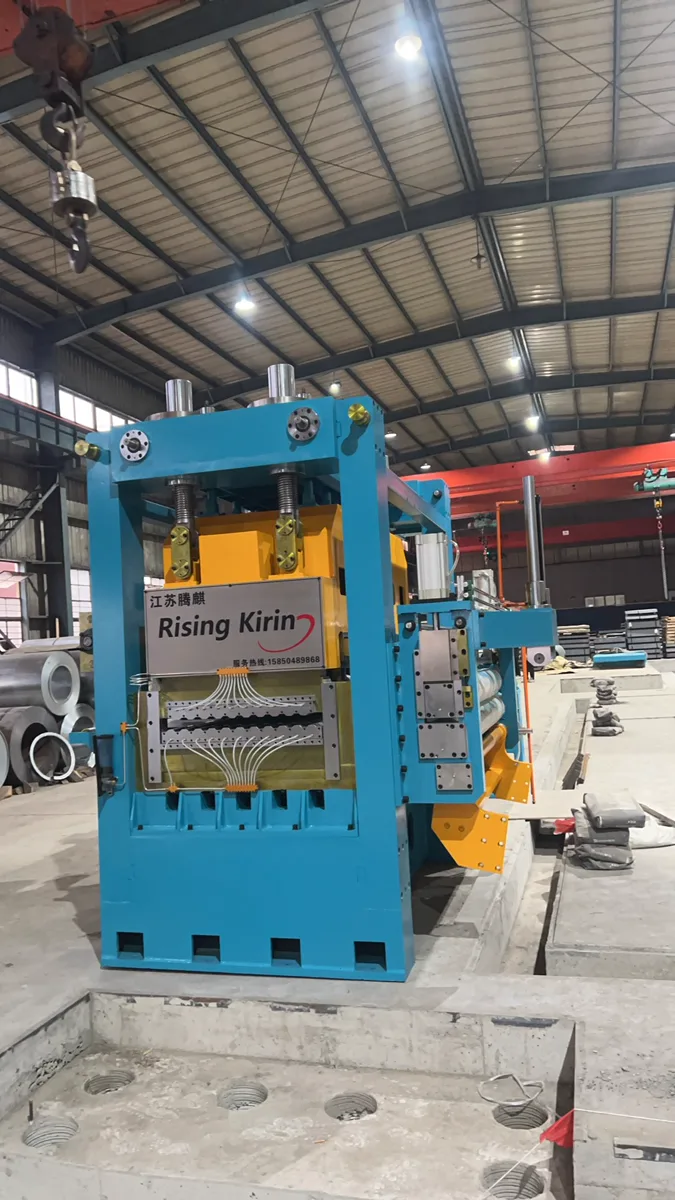
Incoming material condition
Coil set, crossbow, edge wave, center buckle and strength variation create different correction demands. A useful application review begins with the defects that appear in the incoming coil and the flatness required after cutting.
Leveler geometry and adjustment
Roll diameter, spacing, backup support, entry and exit adjustment and frame rigidity all influence how the material is worked. The correct arrangement depends on the thickness and strength range rather than a generic machine size.
- Work-roll diameter and pitch
- Backup support
- Frame stiffness
- Adjustment repeatability
Material range and setup
A wide thickness range may require different operating windows or leveling concepts. Recipes help repeat a proven setup, but operators still need clear material information and inspection criteria.
Cutting and downstream handling
Sheet support, cutting force, discharge and stacking can affect the final condition after leveling. Flatness should therefore be reviewed at the finished stack, not only at the leveler exit.
Specify the result
Describe the finished sheet size, material grade, inspection method and acceptable flatness. This gives the engineering team a measurable output target and a better basis for selecting the leveling system.